
Knee Arthritis: Exploring treatment options for pre- and post-operative care.

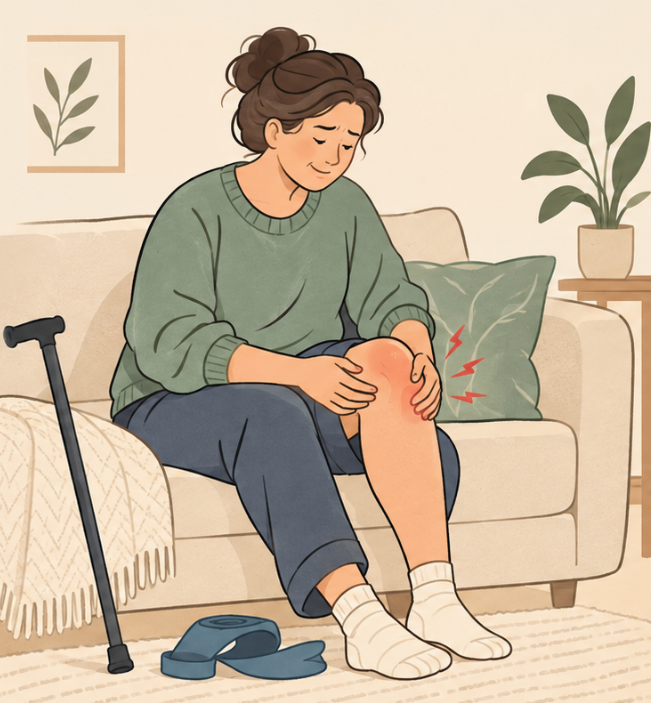
If you’ve been experiencing knee pain, stiffness or restricted range of movement, you may have been told you have knee arthritis. This often raises the question “Will I need a knee replacement?” in many people's minds.
The reality of the condition is reassuring. Knee arthritis is common and an operation isn’t always the first, or hardly ever the only, option. So what actually is knee arthritis and what are the other treatment options?
What is knee arthritis?
Knee arthritis is osteoarthritis of one or both of the two joints in the knee. The condition progresses over time as the joint becomes more irritated and the cartilage that helps the knee move becomes thinner.
You might notice
Swelling around the knee.
Some stiffness in the joint in the morning or after resting.
Pain when standing up, walking up and down the stairs or twisting your knees (like doing the 1920s Charleston!).
Restricted movements or flexibility.
Knee arthritis isn’t just wear and tear; it impacts the surrounding muscles, ligaments and how you walk each day.
Is surgery needed?
Every person is different. Many people manage knee arthritis without needing an operation and many do opt for an operation and it is a success.
A knee replacement is considered when pain becomes unbearable and when other treatments are no longer effective.
For most people, conservative care such as osteopathy and lifestyle adjustments are the first step to getting their legs back into the swing of things!
How can osteopathy help?
Osteopathy focuses on helping your body heal and move as well as possible with little to no pain.
Reducing pain and increasing mobility can be achieved through sessions with treatment tailored to your pain journey, whether an operation is in your future or not. Hands-on techniques, lifestyle adaptations and exercise advice can all work towards managing symptoms and improving your knee function.
Osteopathy can’t reverse arthritis but it can slow the progression of the condition while improving symptoms along the way.
So what if I do have a knee replacement?
If surgery is needed, preparing your body beforehand can be very beneficial. Strengthening muscles, increasing mobility and being educated on the condition all guide a successful, smooth recovery afterward.
After knee surgery, osteopathy assists with restoring movement, strength and confidence in the joint. We will keep your recovery on track!
Thinking about your next (pain-free) steps?
Whether you’ve recently been diagnosed with arthritis, struggled with the condition for a long time or have had issues with your recovery post-operation, the right support can make a difference. At Langstone Osteopathy, we strive to help you along this journey!

Comments